
For many SMEs, factoring is a logical way to strengthen cash flow. But in practice, not every factoring solution delivers the same results. When the advance is lower than expected, or the contract terms limit your flexibility, it can lead to a lot of frustration.
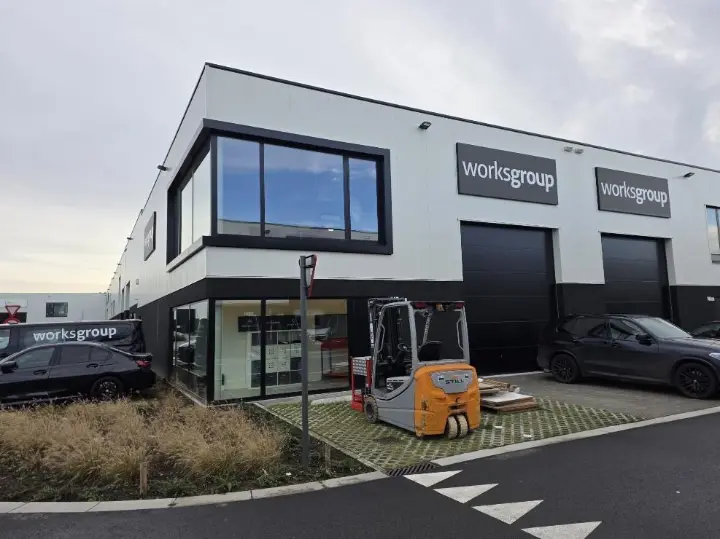
Worksgroup, based in Stabroek, found that out first-hand. The company specializes in working at height and operates across the Antwerp region. When Nextfactor started offering independent factoring advice to SMEs in 2024, Worksgroup was one of its first clients.
We spoke to Kenneth Gantois, co-founder and director of Worksgroup, about their experience with factoring, the switch to a new financing partner and the value of independent advice.

How did you come into contact with Nextfactor?
“It was pure coincidence, really,” says Kenneth. “We were looking for a different factoring company, because our main bank’s factoring service wasn’t working properly. Despite big promises and high financing rates in the contract, less than 40% of our portfolio was actually being financed.”
Kenneth was introduced to Nextfactor through a mutual contact. “They opened up a whole new world for us. They showed us that, besides the banks’ own factoring companies, there are plenty of other players that are far better at meeting the specific needs of SMEs.”
How did the switch to American-style factoring with Svea go?
On our advice, Worksgroup moved to Svea in the summer of 2024. Svea is a Swedish bank that finances SMEs through American-style factoring. Kenneth says the switch went remarkably smoothly.
“Nextfactor brokered a short agreement between the old and the new factor. They agreed to pass on to each other any payments that were meant for the other. As a result, the old factor quietly faded out of our portfolio. The way the switch was handled was fantastic. We’re a service business, and thanks to Nextfactor’s support we could stay focused on our core business: serving our customers,” Kenneth tells us.
Is Svea the right partner?
“Absolutely,” Kenneth says without hesitation. “At Svea, every invoice is financed at 100%. If an invoice can’t be financed, for example because a customer isn’t creditworthy enough, Svea simply doesn’t buy it. So you don’t pay a factoring fee on it either. With our bank’s factor, we had to hand over everything, whether it could be financed or not.”
As a result, 100% of Worksgroup’s portfolio is now financed, instead of 40%. There are no hidden costs at Svea either. If a customer pays a little after the agreed due date, Svea bears that cost itself. “That makes sense, really,” says Kenneth. “Svea also handles our credit control. Still, it’s something you rarely come across.”
The relationship works well on a personal level too. Their account manager, Emiel, is easy to reach and actively helps find solutions.
How would you compare American-style factoring with traditional bank factoring?
“The biggest difference is freedom,” Kenneth stresses. “With American-style factoring, you can choose which customers to include. With traditional factoring, we couldn’t.”
“There are also no limits on customer concentration with American-style factoring. That’s why our bank’s factor financed so little: our largest customer could make up no more than 20% of the portfolio, and anything above that wasn’t financed. American-style factoring has no such limits. In return, you do have to provide signed job sheets. Because SMEs often work with a small number of large customers, that concentration limit often works against them.”
Read more: What is factorability and why does it matter?
What role did Nextfactor play in the switch?
Worksgroup says Nextfactor played a key role in making the switch a success. “Nextfactor first took the time to get to know our business properly. That knowledge, combined with their knowledge of the factoring market, led us to Svea, the provider that suits us best.”
“What Nextfactor also did really well was prepare our file and present it to Svea in a way that made them keen to work with us straight away. Everything was complete from the start, and the application was approved very quickly.”
Nextfactor stayed involved after the start, too. It follows the relationship closely, which gives Svea extra confidence. “It’s reassuring for them that a Belgian party with real expertise is keeping an eye on things,” says Kenneth.
How has factoring helped your business develop?
“The solution Nextfactor came up with has taken away a huge amount of financial stress and frustration. We have room to grow again. And our fear that our relationship with the bank would suffer turned out to be unfounded. Quite the opposite: I think our banker is secretly glad we no longer have to complain about our factor.”
What advice would you give SMEs that are considering factoring?
Kenneth says many Belgian SMEs have the same reflex: for every financial question, they go to their bank first. That seems logical, but the advice you get there is by definition not neutral. “A bank will always put its own factoring company forward. Even when that isn’t the best solution.”
So Kenneth’s advice to business owners is clear. “Talk to an independent adviser who specializes in factoring. It can make a world of difference, as we found out ourselves.”
Comparing providers yourself? Read our 5 tips for comparing factoring companies.


