Reverse factoring
With reverse factoring, your supplier gets paid right away and you pay later. You keep cash in your business longer, and your supplier stays happy. Here's how it works and who it's for.
Book a no-obligation consultation
The first conversation is free, with no obligation.
What is reverse factoring?
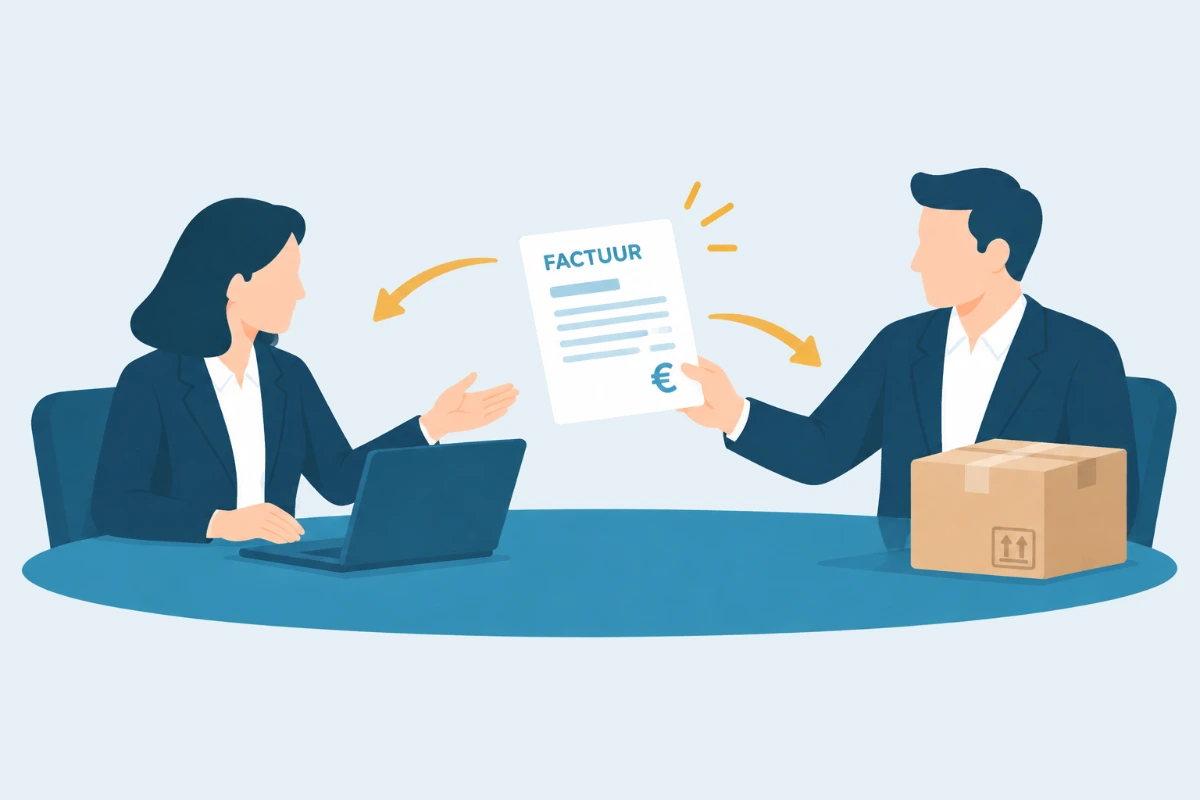
With factoring, you get paid early on the invoices you send your customers. Reverse factoring flips that around: it covers the invoices your supplier sends you. A factoring company pays your supplier right away, and you pay the factoring company later.
You may also hear it called supplier finance or supply chain finance. It's the same thing.
| Factoring | Reverse factoring | |
| Which invoices? | The invoices you send your customers. | The invoices your supplier sends you. |
| Who gets paid faster? | You. | Your supplier. |
| What's in it for you? | You don't have to wait for your customers to pay. | You get more time to pay. |
New to factoring? Start with What is factoring?
How does reverse factoring work?
Your supplier delivers and sends you the invoice. Business as usual.
You approve the invoice. That tells the factoring company everything checks out.
The factoring company pays your supplier. Payment goes out within 24 hours of your approval.
You pay the factoring company. That comes later, on the agreed date.
Reverse factoring only works when everyone is on board: you, your supplier, and the factoring company.
One thing is always required: clear invoices, backed by supporting documents.
Reverse factoring for large companies
If you work with a lot of suppliers or subcontractors, you're the one who signs the contract with the factoring company. It pays your suppliers, and you hold on to your cash longer. You pay a fee in return.
Your suppliers get paid fast. No more waiting on your payment.
You keep more cash on hand. You pay later, and your suppliers don't feel the difference.
Your subcontractors stay afloat. A business that gets paid on time is less likely to run into trouble.
It works across borders, too. Suppliers outside Belgium can take part as well.
Nextfactor can help you set this up. We'll look at your situation together and find the right partner.
Reverse factoring for SMEs that sell to consumers
If you sell to consumers, you usually can't factor your own invoices, because factoring is built for invoices to other businesses. Reverse factoring can still take the pressure off your cash flow.
Here's how: your supplier signs a factoring contract covering the invoices they send you. They get paid within 24 hours, and you get more time to pay. We'll sit down with you and your supplier to set it up. Your supplier wins, too: no more waiting to get paid.
Two things have to be in place:
Your business needs an approved credit limit. That's the amount a credit insurer is willing to cover for you.
There has to be at least €100,000 in annual revenue. That means business-to-business revenue. The same goes for any factoring agreement.
An example
This example is hypothetical. A kitchen installer sells to homeowners. His customers pay most of the bill only after the kitchen is in. In the meantime, his cabinet supplier wants to be paid. With reverse factoring, the supplier gets paid within 24 hours, and the installer gets more time to pay. That tides him over until his customer pays.
What does reverse factoring cost, and who pays?
The factoring company charges a fee for the financing. Who pays it is up to you and your supplier. Sometimes the buyer pays, sometimes the supplier, and sometimes they split it. It depends on who applies and what the two of you agree on.
We can't quote a fixed price here, because every case is different. For a look at how factoring is priced, see How much does factoring cost?
Is reverse factoring right for you?
Do any of these situations sound familiar?
You sell to consumers. Factoring your own invoices usually isn't an option. Reverse factoring is.
You have to pay your suppliers before your customers pay you. Your cash is tied up in purchases.
Your supplier wants to be paid faster. With reverse factoring, they get their money right away, and you don't have to pay any sooner.
You work with a lot of suppliers or subcontractors. You want them paid quickly without draining your own cash.
Still not sure? We'll look at your situation together and tell you honestly whether reverse factoring makes sense. Wondering if something else would fit better? Take a look at the types of factoring.
Frequently asked questions about reverse factoring
Don't see your question? See all FAQs.
Factoring covers the invoices you send your customers. Reverse factoring covers the invoices your supplier sends you. Your supplier gets paid right away, and you pay later.
Yes. Reverse factoring only works if you and your supplier are both on board. We can help you have that conversation.
That's between you and your supplier. Sometimes the buyer pays, sometimes the supplier, and sometimes they split the cost.
Yes. Invoices to consumers usually can't be factored. But with reverse factoring, your supplier gets paid right away and you get more time to pay.
Want to know if reverse factoring is right for you?
We'll look at your situation together and tell you honestly whether reverse factoring makes sense. If it does, we'll find the right partner and sit down with you and your suppliers.