
For many SMEs, factoring is a logical way to strengthen cash flow. In practice, however, not every factoring solution delivers the same results. If advance payments are lower than expected, or if contractual terms limit flexibility, this can lead to frustration.
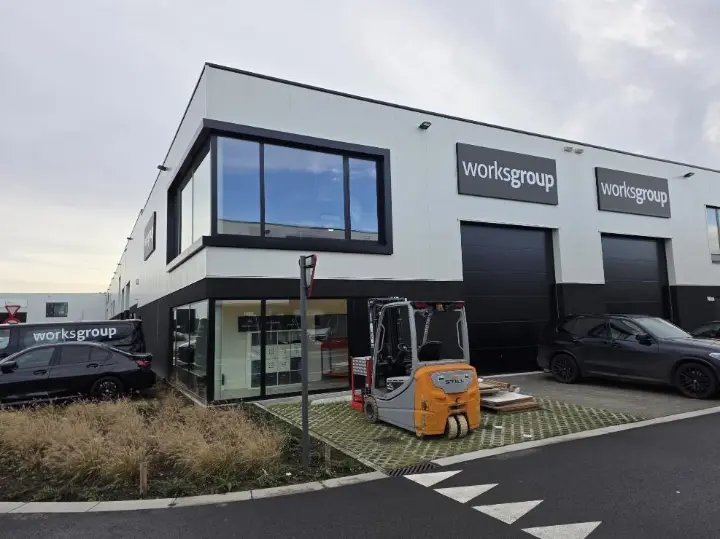
Worksgroup from Stabroek experienced this first-hand. The company specializes in working at height and mainly operates in the Antwerp region. When Nextfactor launched in 2024 with independent advice and guidance on factoring for SMEs, Worksgroup was among the first clients.
We spoke with Kenneth Gantois, co-founder and director of Worksgroup, about their experience with factoring, their transition to a new financing partner, and the role of independent advice.
How did you come into contact with Nextfactor?
“It actually happened quite by chance,” says Kenneth. “We were looking for another factoring company because our main bank’s factoring service wasn’t working properly. Despite fine promises and high contractual financing rates, in practice it turned out that less than 40% of our portfolio was actually being financed.”
Kenneth came into contact with Nextfactor through a mutual acquaintance. “They really opened up a whole new world for us. They showed us that, alongside the banks’ factoring companies, there are plenty of other players who focus much better on the specific needs of SMEs,” he says.
How did the switch to American-style factoring with Svea go?
On our advice, Worksgroup switched to Svea Finans in the summer of 2024, a Swedish bank that finances SMEs through American-style factoring. According to Kenneth, the switch went remarkably smoothly.
“With NextFactor acting as an intermediary, a brief agreement was drawn up between the old and new factoring companies, whereby they agreed to transfer the receivables intended for the other factoring company to one another. This ensured that the old factor gradually and seamlessly disappeared from our portfolio. The efficiency with which this transition was carried out is fantastic. We are a service-oriented company, and the excellent support from NextFactor ensured that we could continue to focus on our core business: serving our customers,” Kenneth explains during our interview.
Is Svea a suitable partner?
“Absolutely,” Kenneth replies without hesitation. “At Svea every invoice is financed 100%. If an invoice cannot be financed, for example because a customer is not sufficiently creditworthy, it is simply not purchased and you therefore do not pay any factoring fee. With our bank factor, on the other hand, we had to transfer everything, whether it could be financed or not.”
The result of this switch is that 100% of Worksgroup’s portfolio is now financed, instead of 40%. What’s more, there are no hidden costs at Svea. If a customer pays a little later than the agreed due date, Svea bears the cost of the extended financing itself. “That actually makes sense,” says Kenneth. “After all, Svea also handles accounts receivable, yet this is something you rarely come across.”
On a personal level, too, the collaboration is going extremely well. Their account manager, Emiel, is easily reachable and actively contributes ideas for solutions.
How would you compare American-style factoring with traditional bank factoring?
“The main difference is the freedom,” emphasises Kenneth. “With American-style factoring, you can choose which clients to take on, whereas this wasn’t the case with traditional factoring.”
“Furthermore, with American-style factoring, there are no restrictions on customer concentration. That was the reason why so little was financed by our bank factor: our largest customer was allowed to account for a maximum of 20% of the portfolio; anything above that was not financed. American-style factoring has no such restrictions. On the other hand, you do have to provide signed performance vouchers. Because SMEs very often deal with a limited number of large clients, that concentration rule very often works against them.”
What role did Nextfactor play in that transition?
According to Worksgroup, Nextfactor played a crucial role in the success of the transition. “Nextfactor first took the time to get to know our company thoroughly. And that understanding, combined with their knowledge of the factoring market, led us to Svea Finans, the partner that suits us best.”
“What Nextfactor also did exceptionally well was to prepare our file and present it to Svea in such a way that they were immediately keen to work with us. Everything was complete from the start and met their expectations.”
Nextfactor remains involved even after the launch. They monitor operations closely, which gives Svea extra confidence. “It’s reassuring for them to have a Belgian party with expert knowledge looking over their shoulder,” says Kenneth.
How has factoring contributed to the development of your business?
“The solution provided by Nextfactor has taken away a huge amount of financial stress and frustration. We once again have the scope to grow. And the fear that our relationship with the bank would deteriorate turned out to be unfounded. Quite the opposite, in fact: I think our banker is secretly pleased that we no longer have to complain about our factor.”
Advice for SMEs considering factoring
According to Kenneth, many Belgian SMEs make the same reflex decision: for every financial issue, they immediately turn to their bank. That may seem logical, but the advice you receive there is per definition not neutral. “A bank will always push its own factoring company forward, even if it’s not the best solution.”
His advice to entrepreneurs is therefore clear. “Consult an independent advisor who specializes in factoring. It can make a world of difference, as we have experienced ourselves.”

Not sure whether your invoices qualify for factoring? Feel free to contact Nextfactor for an initial exploratory conversation. Together we will assess which factoring solution best fits your business.